Popular Posts

Latest Post
Showing posts with label GCSE Language Controlled Assessment. Show all posts

Chat Show Clips

Many people have asked for links to the clips we've looked at in class:

Here is a list of clips:

Graham Norton Jimmy Carr - Accents

Graham Norton Salma Hayek

Graham Norton Will Smith

Jonathan Ross Jay Z

Jonathan Ross Will Smith

Jonathan Ross Usain Bolt

Jonathan Ross Stephen Fry

David Letterman Boris Johnson

Jimmy Fallon Zach Galifinakis

Some others you may wish to view:

Jonathan Ross Lady Gaga

Graham Norton Gerard Butler

Remember the devices you can look for:

Overt Covert Prestige Language

Grice's Maxims

Spontaneous Features

Paralinguistic / Prosodic Features

Language Devices
 

Writing about Spoken Language

A number of people have asked me how you have to write about the Spoken Language Study. Again it is a case of analysis and evaluation but instead of zooming in or out of written work you are zooming in and out of the spoken word.

Analysing spoken language is similar to analysing a novel as you are still looking for devices / techniques but and you are evaluating its success against its purpose. See this post for more details: Spoken Language Study

We've agreed that a chat show should:

Give information to the wider audience and entertain them.
Give celebrities the opportunity to sell themselves / a product.

and that a chat show host:

Should create an identity for his / her show through their use of language etc.

If we look at this clip and then the following answer.

Graham Norton clearly has some planned questions he wishes to ask Salma Hayek to gain some new information for his wider audience. Without hesitating, he asks Hayek about her body image. This was clearly expected as she replied with 'we're talking about my breasts now' indicating that she knew this was coming and was prepared to talk about this. This is brand new information to the audience (who may tune in for celebrity gossip) to show that he is a skilled interviewer and to boost his audience. Her answer becomes more spontaneous as Jimmy Carr questions her and we can see from her hesitations and giggles, she is unsure about how to deal with this. Although this makes it clear she is insecure about talking about this subject, it is interesting information for the viewers. Graham Norton has prioritised his wider audience at the expense of his guest's comfort to keep viewers entertained and informed. During this, Norton flouts the relevance maxim my moving quickly to a segment on an Internet video. This may be to stop the guest feeling uncomfortable therefore restricting the information that the audience can gain. This is clearly pre-planned segment but it is obvious it hasn't been shared with the guests because Hayek is confused where the interview is now going and false starts in her answer. By flouting the maxim Norton sticks to his plan but loses the chance to gain more information on the topic in favour of humour but in doing so creates a section of interview that seems awkward to the viewer but they do get both entertainment and new information from the show.

As you read this look at the sections in green, red and blue.

The green sections you are showing evidence that you are aware of the show's purpose, format, audience or devices. 

The red sections you are zooming in on the effect of the language being used by the chat show host / guest.

The blue section you are evaluating how successfully the host has used language to create an effective interview.

So the methodology for writing about the way language is used in a chat show is:

Look for the features / devices that are used to appeal to the audience(s), that are appropriate to the format or  match the purpose of the show.

Analyse why the chat show host has used language in this way.

Evaluate whether the interview was successful / unsuccessful because of this.

Have a go at write a section one of the clips below.

Michael Parkinson - Rod Hull and Emu

Carol Vorderman - Piers Morgan Life Stories

Tom Cruise on Oprah
 

Spoken Language Study - What we've covered

I know a lot of the preparation for the Spoken Language study has been disrupted by the mock exam fortnight. So here is a re-cap of what we've covered so far:

Assessment Objectives in a Nutshell:

1) You need to analyse / evaluate the use of Spoken Language.
2) You need to be aware of / analyse / evaluate attitudes to Spoken Language.
3) You need to be aware of the way you use language and why.

Focus - Chat Shows

Throughout the unit we have covered  the following topics:

1) The difference between accent and dialect and attitudes towards these.
2) Slang and Overt / Covert Prestige Language.
3) Grice's Maxims
4) Turn-Taking and Back Channeling Behaviour
5) Features of Spontaneous Speech.

Looking at the first two points - this video illustrates them perfectly.

Kevin and Perry

Here we have examples of Accent and Overt / Covert Prestige language.

Covert Prestige language is where you modify your language to associate yourself with an exclusive / secretive group. In the clip we see that Perry has been to Manchester to see Oasis and he has modified his language to associate himself with the band and their followers. He has also changed his accent to make himself sound like he is from Manchester.

You also have Kevin using a different type of Covert Prestige language in the beginning where he speaks in a way that identifies himself with teenage culture. As the sketch progresses, he tries to align himself with Perry by modifying his language to associate himself with Perry, but the humour is created as he ends up speaking like a Yorkshireman.

When Kevin's Mum appears Perry modifies his language to use Overt Prestige language to appear polite. Over Prestige language is the widely used dominant way of speaking and he associates himself with the idea of education / manners / good up bringing by using this.

If we apply this to our focus of Chat Shows, often the chat show hosts will modify their language to suit their guest as we will see with an example below. This could be to make the guest feel more comfortable or for a humorous effect.

So what is the point of a Chat show?

Purpose: To entertain and to Inform (For celebrities appearing on the show it is often to persuade the wider audience to take an interest in them / a product)

Audience: For the Chat Show Host it is a case of balancing two audience - The Guest and the Viewers.

Demograhics - Often Female in an age bracket of Twenties plus (some can be more specific depending on the show)

Format: Guests come on and they are interviewed.

Looking at these clips we can see evidence of Overt / Covert Prestige Language

Jonathan Ross with Jay Z

Jonathan Ross with Stephen Fry

With Jay Z, Jonathan Ross uses Covert Prestige language in such an awkward way it creates humour, whereas he uses Overt Prestige language for Stephen Fry again meeting the entertainment purpose of the show.

Grice's Maxims are the rules which govern polite conversation. We would expect these to be followed on a chat show but they can be FLOUTED for a specific effect or VIOLATED unintentionally.

The Maxims are:

Quantity: Give the right amount of information.
·Make your contribution as informative as is appropriate
·Do not make your contribution more informative than is appropriate.

Quality: Try to make your contribution one that is true.
·Do not say what you believe to be false
·Do not say that for which you lack  adequate evidence

Relevance: Be relevant.

Manner: Be clear.
·Avoid obscurity of expression
·Avoid ambiguity
·Be brief (avoid unnecessary wordiness)
·Be orderly

With Stephen Fry - Jonathan Ross flouts the Manner Maxim in an attempt to show his intelligence but self-consciously aware that this is humorous for the audience.

Jay-Z on the other hand flouts the Quantity Maxim, which makes the interview awkward but also serves to create an enigma around his persona developing the impression that he is mysterious and therefore deserves more attention.

Graham Norton Show is a perfect example of the importance of Back-Channeling and Turn-Taking behaviour. His show is unusual because all the guests are sat on the sofa at the same time and the interview doesn't necessarily focus specifically on one star. It is important for Norton to use turn-taking cues to manage the guests need to speak and promote themselves but also to back-channel to show interest in the guests ideas.

For the guests they have to be aware that they are on camera at all times and need to seem interested in what the others are saying to avoid appearing sulky or aloof.

Turn-Taking Cues:


  • Completed grammatical structure. 'I have had a very tiring day'.
  • A rising intonation at the end of the sentence. (brought in from Australian 'soaps').
  • Asking a question. 'How are you?'
  • Naming another person.
  • Seizing a turn by interrupting an unfinished sentence.(marked in transcripts by '......')
  • When one speaker overlaps the other and one stops speaking.(marked in transcripts with '/')
Back Channeling:


Continuers: Hand the floor back to the speaker. 'mmm', 'uh-huh'

Acknowledgers: Express agreement/understanding 'mm'. 'yeah'

Assessors: Express appreciation. 'wonderful', 'how awful'

Newsmarkers: Mark the speaker's turn as news. 'really!' , 'Is it?'

Questioners:  Ask for further details. 'and then?'

Collaborators: Finish another person's utterance.

Non-Verbal: Laughter, sighs, frowns' etc.

Graham Norton - Will Smith, Bradley Cooper, Jaden Smith, Heather Graham

Finally - though chat shows are heavily researched and questions carefully planned and evaluated, they need to have an air of spontaneity to them to have a natural feel and to put the audience / guests at ease.

In this Letterman clip a spontaneous question about Boris Johnson's hair creates humour and in this clip from Graham Norton an unexpected question for Salma Hayek becomes initially awkward as Hayek displays elements of spontaneous speech which indicate she feels slightly uncomfortable.

Boris Johnson on Letterman

Salma Hayek on Graham Norton Show

Overall - your job is to look at how the host and guests manage the chat show experience and analyse the effect they are trying to have in their use of language. As a higher level candidate you will also cover what the audience are likely to think about this and how successful you think the Chat Show host has been in creating an effective interview.

This isn't just about finding the techniques it is about being able to analyse their effect and evaluate success.

Good luck planning and keep watching Chat Shows to build your data from.


Writing MOT

Theory and Reflection


You will soon be receiving a writing MOT from me.

This is not just based on your Controlled Assessment results but also on the work you are able to carry out spontaneously in class.

I'm really pleased with the results of your Controlled Assessments but now we need to focus on replicating these great results in your exam writing.

The exam is a separate beast. You don't know what you are going to be asked to write about, you don't have a note sheet to help you plan and you are writing in a more pressured environment against the clock.

Before we move on to the next steps, we need to reflect on how we got to your excellent Controlled Assessment results.

I knew the end point of the task (though I wasn't allowed to fully share it with you until closer to the assessment).

I set a number of lessons which enabled you to do two things:

1) Look at examples of expert writing and work out why they were considered 'expert'.

2) Practise writing in a number of distorted situations moving towards the real assessment.

As I've said in class, your revision starts now. We've covered all the writing and reading skills you need to develop: you need to practise using these skills in exam conditions. Like everything in life, you will get better with practice and the more you practice the better you will get.

I will be basing my projected grades on how much I feel you have been practising and are prepared to practise.

I wrote a blog posting in March last year after the previous Year 11 got their examination results - this talked about 'Visible Revision'. You can read it here. The short principle of 'Visible Revision' is that if you keep your revision between yourself and your bedroom walls, how do you know what you are doing is right? Make your revision visible to your teacher and you get consistent feedback and can know what you are doing is right.

In class this was straightforward - we were all working on the same topic, you showed me your work and I gave you feedback. In revision the onus is on you. You work on your strengths and weaknesses and present them to me.

Case Study


Before you say 'Sir  - this sounds like an awful lot of work without immediate rewards', I present to you two case studies:

Student A -

Finished Year 10 with a Literature B grade and a Year 10 mock of a C grade.
Carried out weekly visible revision from November and gained an A* grade by the end of Year 11. 2 to 3 grades improvement.

Student B -

Was strong at varying her five key areas of writing but her ability to use appropriate written expression meant that she was consistently getting D grades in her writing. She read two articles from the list of writers below and wrote one article a week on a topic of her choice trying to mimic the writer's styles. In 6 weeks her writing had progressed from a D grade to a B grade. 2 Grades improvement in 6 weeks.

Writers:

Caitlin Moran
Grace Dent
Charlie Brooker
Stewart Lee
Sophie Heawood
Cal Flynn
David Mitchell

The importance here is the pathos. Try to move seamlessly between serious and humorous points.

The Writing MOT

You will receive a feedback sheet with skills that are key for your writing graded to give you a complete picture of your strengths and weaknesses.

Theses are your five key areas to vary:

Vocabulary
Devices
Sentence Structures
Punctuation
Paragraph

Plus:

Spelling
Expression

You will be graded A*, A , B, C, Below C for each of these skills.

You will be also rated on a scale showing your ability to use English flexibly. This will fall on a scale of:

Only being able to write using informal everyday language.

Some of your work being informal everyday with parts of it also showing expert academic use of language but not always in the correct context.

Having a mastery of expert academic language and informal everyday language and always using it in the correct context.

I will give you a target and then in a separate box you need to write down what you are going to do to actually work on this target.

We will then review this as the term goes on.

Now if you are serious about your revision you should rate yourself objectively and work out what you think you need to work on.

If you set yourself a target I will tell you what you need to do to meet it. Then we can see if it matches my impression of your writing next week.

Post your own rating in the comments box.
 

TV Advert Writing


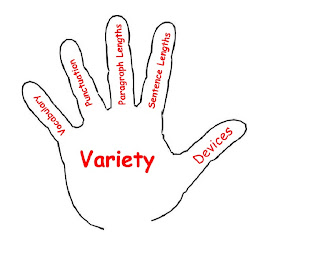
Have a look at the example in red below. We've been working on creating variety in our writing through our handy (you see what I did there?) diagram:

https://blogger.googleusercontent.com/img/b/R29vZ2xl/AVvXsEh5Re6VfbiDLts9IHyIJ1Pqig2X3akpQBQ_AD55K-hDgk45mArzQu1jr4xrDYnTq03ofo2MXvJ_jMLjWlsMl6Qe0qmZXT5hsASGV3Q8EIYCy5Zj-86PRPi1tdp_VAubfJ9xgU1h_TEjHkk/s1600/Variety.jpg 
In class we've worked on our vocabulary looking at:

Positive / Negative Vocabulary and how to create oxymoron.
Increasing our range of sophisticated vocabulary.

We've developed devices to add satire, irony and sarcasm to our writing:

Stating the Obvious
Descriptive Imagery
Making Comparissons
Hyperbole
Misdirection
Rhetorical Questions

With our sentence structures we've tried to use our skills creatively:

Varying Length
Complex Sentences with pivot in attitude.
Complex Sentences with embedded sarcastic clauses
Compound descriptive sentences leading to short high impact sentences with opinions

Our punctuation has become useful to achieve not just accuracy but effect:

Parenthetic commas, brackets and dashes
The Semi-Colon for extending imagery
The liberal use of exclamation marks.

Finally paragraphing draws our whole text together with:

Variety in length
Effective use of discourse markers.

So my challenge to you Year 11 is:

Read below and leave a comment:

What went well?

What could make this even better? 

Can you remember that feeling of deep-seated panic when your phone goes off in the cinema? The embarrassment of lifting the phone out of your pocket to turn it off only to be illuminated in the pallid green glow of shame and have your face melted by the glares of one hundred and fifty angry Monster’s Inc fans (including the creepy middle aged man who doesn’t seem to have brought children or a date). It’s hideous. It only has to happen once for you to never want to own a phone again. 

Here is the effective deterrent.  Absorbing the ire of a multitude of strangers clearly outweighs the crime of not turning your mobile off (off not silent) and when the punishment is more severe than the crime, people tend to grow a moral compass. This is what has happened since a Finnish designer at Nokia liberated Alexander Graham Bell’s mouthpiece from the hall table and one unfortunate consumer couldn’t find the off button in a screening of Jurassic Park.

Orange has a solution to this problem. To save us from the embarrassment they make us sit through five minutes of excruciating audio-visual hell.

Cue cringe-worthy puns, poorly thought out dialogue and the most heinous crime of all: the solution to a problem that does not exist. 

The premise: ‘Don’t let phones ruin your movie’.

Let’s examine that statement. The phone has never ruined a film. One blast of Mozart’s 9th blared through the tinny speakers in digital polyphonic beauty doesn’t distract me. I enjoy watching a person squirm because all eyes are on them. The pain on their face is delightful. In fact, I’m pretty sure the latest Bourne film would be very short without a mobile phone. All witnesses would be dead and Jason Bourne would not have to constantly evade the CIA because he would be untraceable. Generally, movies are built around communication between sets of characters that 90% of the time takes place on a mobile phone. Phones make movies.

The marketing meeting must have been brilliant for this advert:

‘Hey – this product we sell, it ruins things – why don’t we point it out?’

But behind this there’s a subversive attempt to sell us a lifestyle ingrained deep within the advert, which is fantastically clever. It builds a picture of the chief executive as a bumbling fool and the everyman ‘underling’ trying in vain to turn the situation around. The sinister twist is we find ourselves identifying more with the boss than with the everyman. The advert manipulates us into doubting our own intelligence, our own inbuilt nature not to make a scene and our own natural morality in avoiding punishment. The doubt sees our hand slowly creep towards our trousers like a toddler desperate for a wee.

Bang. Then the advert really hits us; they present the most common mobile phone ring tone out of sync with the advert sending hearts leaping through mouths and hands shooting into pockets causing hours’ worth of psychotherapy sessions because you can ‘feel the eyes on you’.

Exploiting humanities’ guilt complex is what I loathe. I loathe it far more than the poorly constructed advert, dialogue, shots, puns and message. I almost loathe it more than the feeling of being caught with your phone on.

This advert is a fantastic piece of work, if you display a deranged obsession with sadism. I can remember the deep-seated panic of when my phone went off at the cinema and now I’m reminded of it every time I blow my life savings on a film. 

Orange – a phone didn’t ruin my movie: your advert ruined my life.
 

Year 11 Homework Part 2

As I know you will all be short of something to do with the school closing today, here is an update of your next three weeks homework.

You are going to be writing newspaper columns. To improve your understanding of the form, you need to bring in an article you have read each single lesson with 100 words of your own writing based on the same topic.

You should be trying to achieve the same style and effect that the columnist has achieved without copying their work.

There is a real difference between newspaper columns and newspaper reports. A column is usually written by the same person and is opinion based on a topic of the writer's choice (usually something in the news).

Features of a column are usually:

1st Person
Strong Opinions / Often Bias
Anecdotes
Sarcasm / Irony
Often humorous and less formal in tone.

To help you with this, I need you to read at least one column per week (more if you really want to hone your skills) and then try to write your own comment piece based on the topic in your article. In lesson we will then compare your writing with the writing of the pro.

Below are a list of columnists you may wish to check out and the publications they often write for.

Caitlin Moran - @caitlinmoran The Times

Grace Dent - @Gracedent The Independent / Evening Standard / The Guardian

Eva Wiseman - @Evawiseman The Guardian

Sophie Heawood - @heawood The Guardian / The Independent / Vice

Charlie Brooker - @charltonbrooker The Guardian

Stewart Lee - @stewlee The Independent / The Guardian / The New Statesman

David Mitchell - @RealDmitchell The Guardian

Here is a link from Grace Dent you may like.

Be opinionated, witty and wise.

Happy writing.

Mr Milne


Year 11 Homework - Writing Assessments

Here are the key points to the on-going Year 11 Homework.

You are going to be asked to write two contrasting pieces: one fiction and one non-fiction as part of your on-going GCSE controlled assessments.

Your fiction piece is going to be a recreation from a poem of your choice (two poems also suggested below), which means you need to use the poem as inspiration.

This could be:

1) Use some lines of the poem to build a new story around.
2) Explore the theme of the poem in a story of your choice.
3) Evoke the atmosphere of the poem in your own writing.
4) Modernise the poem creating your own story.

Just let me say now - YOU ARE NOT WRITING YOUR OWN POEM.

The homework for this unit of work involves you writing 100 words per week based on a poem of your choice. This does not have to relate to your final piece, this does not have to be a complete story and this does not have to be perfect.

You may choose to write the opening or describe the setting, or write some sections of dialogue or describe a key event or write the ending. The key is that you write.

The homework is necessary because like everything, writing takes practice. Writers re-draft and re-draft down to the most minute word or sentence until they are happy.

You need to practice so you can develop your own style, the rhythm of writing and so you can make mistakes.

All through last year when we were studying literature, you were reading as a writer (you read looking specifically at the writer's craft). Now it is key that you write as a reader (everything you write should be deliberate in order to influence the reader).

Here is a key diagram to help you:


Every Wednesday, you are expected to bring in your writing to present to the class for suggestions and praise.

The poems covered in class are below but you can choose any poem you wish:


Spellbound

  by Emily Brontë
The night is darkening round me,
The wild winds coldly blow;
But a tyrant spell has bound me
And I cannot, cannot go.

The giant trees are bending
Their bare boughs weighed with snow.
And the storm is fast descending,
And yet I cannot go.

Clouds beyond clouds above me,
Wastes beyond wastes below;
But nothing drear can move me;
I will not, cannot go.
- See more at: http://www.poets.org/viewmedia.php/prmMID/16632#sthash.TEtsRmRK.dpuf

The poem Spellbound by Emily Bronte
 
The night is darkening round me,
The wild winds coldly blow;
But a tyrant spell has bound me
And I cannot, cannot go.

The giant trees are bending
Their bare boughs weighed with snow.
And the storm is fast descending,
And yet I cannot go.

Clouds beyond clouds above me,
Wastes beyond wastes below;
But nothing drear can move me;
I will not, cannot go.

Spellbound

  by Emily Brontë
The night is darkening round me,
The wild winds coldly blow;
But a tyrant spell has bound me
And I cannot, cannot go.

The giant trees are bending
Their bare boughs weighed with snow.
And the storm is fast descending,
And yet I cannot go.

Clouds beyond clouds above me,
Wastes beyond wastes below;
But nothing drear can move me;
I will not, cannot go.
- See more at: http://www.poets.org/viewmedia.php/prmMID/16632#sthash.TEtsRmRK.dpuf

Spellbound

  by Emily Brontë
The night is darkening round me,
The wild winds coldly blow;
But a tyrant spell has bound me
And I cannot, cannot go.

The giant trees are bending
Their bare boughs weighed with snow.
And the storm is fast descending,
And yet I cannot go.

Clouds beyond clouds above me,
Wastes beyond wastes below;
But nothing drear can move me;
I will not, cannot go.
- See more at: http://www.poets.org/viewmedia.php/prmMID/16632#sthash.TEtsRmRK.dpuf

Spellbound

  by Emily Brontë
The night is darkening round me,
The wild winds coldly blow;
But a tyrant spell has bound me
And I cannot, cannot go.

The giant trees are bending
Their bare boughs weighed with snow.
And the storm is fast descending,
And yet I cannot go.

Clouds beyond clouds above me,
Wastes beyond wastes below;
But nothing drear can move me;
I will not, cannot go.
- See more at: http://www.poets.org/viewmedia.php/prmMID/16632#sthash.TEtsRmRK.dpuf

Eyes Look Into The Well

Eyes look into the well,
Tears run down from the eye;
The tower cracked and fell
From the quiet winter sky.

Under a midnight stone
Love was buried by thieves;
The robbed heart begs for a bone,
The damned rustle like leaves.

Face down in the flooded brook
With nothing more to say.
Lies One the soldiers took,
And spoiled and threw away.
 
W.H Auden 

You must bring the homework in typed or written neatly on a piece of paper. I will not accept scrappy bits of paper done on the bus. 
 
The purpose of this homework is to practice writing. If it is done on the bus or at the last minute in school then you have not given the task enough thought and wasted the opportunity to truly improve your skills.
 
Happy Writing!
 
Mr Milne


Of Mice and Men Preparation

There is some confusion surrounding preparations for the Of Mice and Men assessment and this is a post to alleviate (note vocabulary) your sense of worry.

Lot's of you are stating that 'this is the hardest assessment you have done'. What you need to understand as it seems harder because I am stretching you to consistently improve. My job as a teacher is to keep honing and improving your existing skills, adding new ones and challenging you to use your skills in different contexts in different ways.

You are interested in using your skills and knowledge in assessments and exams and enjoy drilling them but that is only part of my job. My job is also to get you to be able to recognise the skills and knowledge you need to use when looking at a question and instinctively know how to tackle it. It may not seem it sometimes but it is not all about exams and assessments. The skills of analysing, evaluating, creating an effective argument and modifying your vocabulary depending on the context you are working in are key for the rest of your life whether you choose, College, A-Levels, University or straight into work.

That's the pre-amble over. Now for the bit you want. The explanation in relation to the assessment.

We have drilled the skills of Analysis and Evaluation looking at individual quotations and also evaluation writer's purpose and ideas. If you are uncertain about these skills then revisit this post that walks you through the ideas.

However, with an extended essay task like this we also need to draw out an argument that links all the analysis and evaluation of quotations that you do. You all did brilliantly well in the Shakespeare assessment at the analysis and evaluation of the quotations but this often read as separate paragraphs evaluating individual quotations without any real link to an argument - your answer to the question.

This is what I keep banging on about by linking your paragraphs to develop an argument.

If I put these two paragraphs next to each other

'Steinbeck  uses George and Lennie to portray thoughts and opinions on companionship. For example, we see this in the first chapter within the line “because I got you to look after me, and you got me to look after you.” With this, we can instantly see the two character’s dependence on each other; they feel as if they can’t look after themselves, so they look out for one another to ensure their safety. The words ‘look after’ can also indicate a sense of simplicity within their task, which can make us readers seem at ease with the fate of the two characters. However, we can also debate that this is used to imply a sense of weakness rather than a strong companionship. It can lead to the statement that there is no George without Lennie, and no Lennie without George. Conclusively, this can relate back to the writers overall message that friendship is a strong bond which should be treated with care. As these two characters come across lonely labourers, we are able to see the significance of friendship as it seems that everyone is in competition with the ones they’re close with, as if Steinbeck is trying to emphasise the idea that “maybe everybody in the whole world is scared of each other”. And so using this friendship can really highlight the contrast between companionship and independence as several characters look upon the two in somewhat jealousy. It could even imply that humans are weak and they always need someone to fall back upon as most of the characters are lonely ‘losers’ in the game that is life itself.'

Steinbeck gives the initial impression of life outside the ranch, being very peaceful and almost dreamlike. He gives this impression by using detailed descriptions of the view to help us see what George and Lennie see. He uses phrases such as, “golden foothill slopes curve up to the strong and rocky Gabilan mountains”. The imagery and absence of anything relating to man sets an idyllic atmosphere though the lack of human contact in the landscape may be hinting at the isolation and loneliness to come. Steinbeck seems to be taking the characters away from human contact to comment on how society breaks down when loneliness dominates people's psyche.

There isn't an explicit link or argument running through them  and they just become strong analysis of key areas of the text. You have a question to explore and development to highlight so you need to consistently link your ideas together into a fluent tackling of the task.

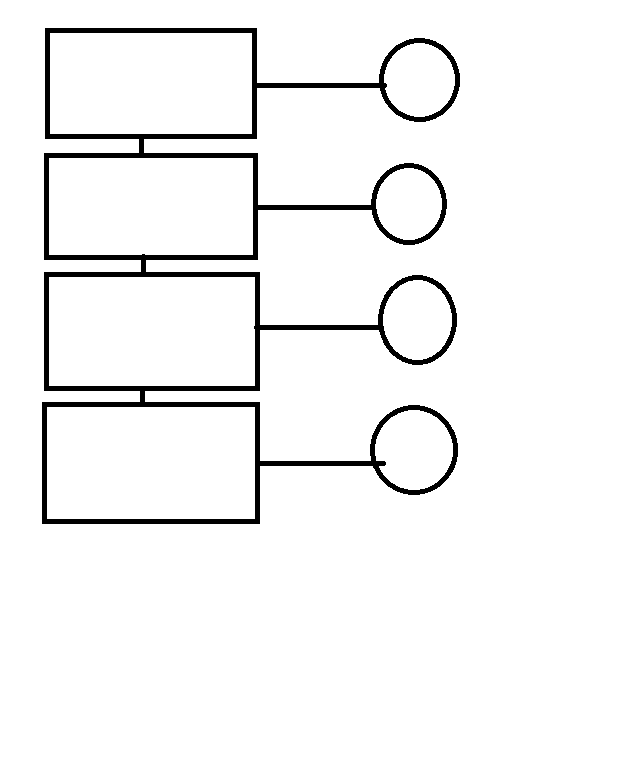
This is the simplest way I can put it (thanks Tom Mulvihill). The diagram represents the points you are going to make with the arrows representing the links to your argument. I would start with an overall statement you wish to make:


Steinbeck explores ... through the use of... to highlight...

E.g. Steinbeck explores the role of women through the use of structure and imagery surrounding Curley's Wife to highlight that despite having dreams and aspirations of the men they have even less power to achieve them.

This becomes your main idea that you wish to express. You introduce your topic (see here) then make your first point.

Steinbeck explores the role of women in Chapter 2


Develops in Chapter 3 with 'Old Susie'

 Shows abuse of power in C.W and Crooks

Develops similarities in Dreams in Chapter 5 and being unattainable just like the men.

Each arrow represents linking back to your original statement before you move on to your next analysis.

If we were to apply that to the original paragraphs:

'Steinbeck  uses George and Lennie to portray thoughts and opinions on companionship. For example, we see this in the first chapter within the line “because I got you to look after me, and you got me to look after you.” With this, we can instantly see the two character’s dependence on each other; they feel as if they can’t look after themselves, so they look out for one another to ensure their safety. The words ‘look after’ can also indicate a sense of simplicity within their task, which can make us readers seem at ease with the fate of the two characters. However, we can also debate that this is used to imply a sense of weakness rather than a strong companionship. It can lead to the statement that there is no George without Lennie, and no Lennie without George. Conclusively, this can relate back to the writers overall message that friendship is a strong bond which should be treated with care. As these two characters come across lonely labourers, we are able to see the significance of friendship as it seems that everyone is in competition with the ones they’re close with, as if Steinbeck is trying to emphasise the idea that “maybe everybody in the whole world is scared of each other”. And so using this friendship can really highlight the contrast between companionship and independence as several characters look upon the two in somewhat jealousy. It could even imply that humans are weak and they always need someone to fall back upon as most of the characters are lonely ‘losers’ in the game that is life itself.'

This idea of the loneliness is further developed within the setting. Steinbeck gives the initial impression of life outside the ranch, being very peaceful and almost dreamlike. He gives this impression by using detailed descriptions of the view to help us see what George and Lennie see. He uses phrases such as, “golden foothill slopes curve up to the strong and rocky Gabilan mountains”. The imagery and absence of anything relating to man sets an idyllic atmosphere though the lack of human contact in the landscape may be hinting at the isolation and loneliness to come. Steinbeck seems to be taking the characters away from human contact to comment on how society breaks down when loneliness dominates people's psyche again exploring the weakness of humans and the need for companionship.'

We now have the a seamless argument that runs throughout reinforcing the points made previously and linking back to a key idea. 

This is what I mean by developing an argument. The only real change is rather than focusing on your analytical and evaluative skills, I am now confident you can do this naturally and want you to trust your natural skills and give extra focus to your argument.

The last focus is to make sure you modify your language. When you start writing, you need to throw out your everyday vocabulary and use your expert academic vocabulary. See here for further details.

So to summarise:

General Tips
  •  John Steinbeck in introduction and Steinbeck throughout the rest of the essay - not John!
  •  Write in the 3rd Person to highlight Academic Confidence
  •  Use Modal Verbs to indicate that your analysis is just a possible interpretation
  •  Use your expert academic vocabulary - No 'putting across' 'zooming in' or 'to the max'
Structural Tips

Introduction - Show a broad knowledge of the text and then narrow the focus to your key argument in the last sentence of your introduction.

Paragraphs - Point, Quotation, Explanation, Analysis, 2nd Interpretation, Evaluation - 

Links - Sandwich the skills you used with links back to your key argument at the beginning and end of each paragraph.

Conclusion - Sum up your argument in a few succinct sentences drawing on the points you've made in paragraphs. State overall what you think Author is exploring.

If you have any questions, post them in the comment box below and I'll get back to you over the weekend. 


Year 10 Of Mice and Men Assessment Work

As we focus in on what is required of us to hit the top bands in the Of Mice and Men assessment, we need to begin developing some sophistication in our language and ideas.

After 7 years of teaching the text, the most successful students have always been the ones that have engaged the examiner / me in some ideas that show they have understood the complexities of the text and not just the surface level of characterisation, setting and plot.

The key words in the mark scheme are sophisticated / impressive / perceptive.

Friday's twitter cast was aimed at developing answers and points that highlight the more complex nature of the text.

Here are two links to the storify version of Friday's lessons with everyone's ideas linked together.

http://storify.com/MrMilne/10x1-of-mice-and-men-twitter-cast

http://storify.com/MrMilne/of-mice-and-men-q2-twittercast

There were a few issues that came up that were quite interesting:

1) That the characters are lonely but a bigger factor behind the feelings of the character is how the setting has thrown them together. From the isolated nature of the ranch, the claustrophobic nature of the bunkhouse and the irony of all the men being thrown together into a small setting yet all feeling equally alone to the more obvious nature of Crook's isolation from the men and proximity to the animals.

2) That the fear of being isolated keeps the men isolated. Nobody is prepared to take a chance with another character for fear of being left behind / outcast.

3) That most of the joy in the novel comes from the characters being with each other (especially Lennie as a 'safe' listener) yet the men all end up fragmented and alone at the end.

You all know the 6 skills you need to show top level skills - you can refresh your memory here and you also know that you need to modify the way you express your ideas by moving to a more formal academic register (see here) - but your key top level thinking skill is Evaluation.

Remember when evaluating and exploring Steinbeck's ideas that he has not written this text as a  historical text (although we sometimes treat it as such). He was living in the Great Depression and the hangover of the 'roaring twenties' and The American Dream. He hasn't written this exclusively to show us what living in that time was like. There is a greater purpose to the text as I his highlighting what society was like but from the negative way he treats his subject material it is like he is trying to point out that changes are needed.

It is your job to show insight and make perceptive points about what Steinbeck is getting at.

Look through the ideas in the tweets - start to formulate your own ideas and if you want to discuss them, post them in the comment box below.
 

Final Of Mice and Men Preparation

Quick post before the weekend to allow you all to practice over the weekend.

First of all Layers of Meaning

Top Band work will peel back the layers of meaning that made Steinbeck a Pulitzer Prize winning Novelist (Grapes of Wrath) and to be awarded the Nobel Prize for Literature.

Firstly identify the surface level understanding of the characters and relationships from your quotation. This is our initial impression. Then peel back the first layer and see if that impression is fair. Once you've evaluated whether the first impression is fair consider if there is yet another way of looking at the quotation. You may want to reference the interactions with other characters here. Consider Steinbeck's craft. What devices are within your quotation and how do they influence the reader and zoom out to look at what wider point you think Steinbeck is trying to make.

To Sum Up:

Surface
Peel back the layer.
Alternate Interpretations
Craft
Evaluate

That makes a handy acronym!

When evaluating and zooming out to look at the intentions of the Author consider these things.

What is Steinbeck telling us about society through the microcosm of the ranch?
Why do we find it difficult to sympathise with Curley's Wife? Should we?
How do women fit in to Steinbeck's microcosm and can that be related to society as a whole?

One of the most interesting lines in the text for me is Slim stating 'Maybe everybody in the whole damn world's scared of each other.' Does this have any significance to Steinbeck's message?

Structuring your argument.

Let's look at the Mulvihill Model of structuring an argument. You have an introduction and conclusion that sandwich a range of developed paragraphs that look like this.


Each rectangular box represents a point you are going to make, which is developed with the use of quotations, peeling back layers and evaluations. These join and develop to give an overall answer to the question. The circles coming from the rectangles represent some of your alternate interpretations. They might not link and build your argument but they show sophistication of thought. You can use this model to create a very simple plan for a range of characters or questions.

Finally using more formal language in your assignments. If you look at the difference between 'I feel Slim is a character with greater foresight than the others' and 'Slim is a character with greater foresight than the others' you here the confidence exude from the second example whereas the first is uncertain. That is the name of Band 4 - Confident and Assured so try to write the majority of your essay in the third person. You can use first person to give personal perspective especially in your conclusion and some of your own original thought but overall, your essay should be 80% third person. below are the handy phrases that elevate the style of your writing. These are collated from a range of teachers to supplement the ones we already use.

Talking about writer's craft:

The author’s use of language / words / tone of voice is significant.
Imagery is significant in this section.
The imagery of ....  is especially significant in this section.
The author uses setting to convey ...
The characterisation of ... is developed in this section.
Structurally, this section is significant.

Evaluating

The author seems to be exploring the them / idea of ...
From one perspective we could say ...  From another we might consider...
Developing the interpretation further, we could argue that...
This links with.....
This idea is repeated when......


 Introducing Quotations

We can see this in the quotation ...
We hear the character described as ...
The word ... demonstrates this.
Arguably, the most significant words are ...  and ...
The image of the ... is crucial to our understanding.

Writer's Intentions

The author seems to be suggesting ...
The author is, perhaps, exploring  the idea of ...
The author is explaining, illustrating, uncovering, hiding, illuminating, developing,

Analysing

The words suggest / imply / convey ...
This word / phrase / image / character makes me think of ... because...
This conveys feelings of ... because....
The word / image contains several ideas.  For example...

Plenty of practice this weekend and have a go at paragraphs if you wish and I can feedback.


Year 11 Example Paragraphs

In lesson today we looked at evidence of two pieces of writing and graded them against the mark scheme. I am not saying whether I agree with your marks or not but below is what you agreed as a class.

Band 4 -


Our initial impressions of the relationship between Curley's Wife and the ranch workers are one of danger and fear. Steinbeck crafts this through the use of symbolism of the colour red which is always attached to Curley's Wife and the ranch workers calling her 'jailbait'. This introduces us to the relationship between the men and Curley's wife but we see that it is more complex. Although red can symbolise danger, it also can symbolise love and passion and may indicate that Curley's Wife isn't dangerous but is only looking for attention or love. The men fear Curley's Wife as Steinbeck highlights their opinion through the use of negative imagery such as 'jailbait', 'rat-trap' and 'tart'. These words suggest danger or negativity towards her which may be because they see her as Curley's property because they don't give her a name and fear being sacked within the historical context of the great depression and the physical retribution Curley may deliver as highlighted at the end of Chapter 3 in the fight with Lennie.

Band 3 - 


I think that the relationship between Curley’s Wife and the ranch workers is bad because they quote things like ‘jailbait’ which I thinks means that they think she could be trouble. Steinbeck writes this because it gives us the idea that they don’t like her and shows that she is going to be trouble which she is when she talks to Lennie. The relationship might not always be bad though because sometimes Slim is nice about her despite the fact that she wears red which could symbolise danger. The men are scared of Curley’s Wife because she is the property of Curley and he can get them sacked or will beat them up like he does with Lennie at the end of Chapter 3. This is why they use negative imagery towards her like ‘jailbait’, ‘rat-trap’ and ‘tart’ highlighting their opinion because of the bad things that they say about them.

We looked at zooming in and engaging with language and structure of a quotation which was the skill of analysis e.g.

The men see Curley's wife as a threat but there is also something intriguing about her which is particularly obvious in them calling her 'jailbait'. The particular juxtaposition between 'Jail' highlighting the danger in her with the temptation of 'bait' highlights both their fascination and fear of her.

Remember that analysis only gets you so far and to really target the top level answers you have to evaluate which we termed as zooming out to show how the skill of the writer in their use of language from the particular quotation we've chosen fits in to the wider jigsaw of the text e.g.

The men see Curley's wife as a threat but there is also something intriguing about her which is particularly obvious in them calling her 'jailbait'. The particular juxtaposition between 'Jail' highlighting the danger in her with the temptation of 'bait' highlights both their fascination and fear of her. Steinbeck skilfully weaves this idea throughout the men's encounters with Curley's Wife highlighting how she and her relationship with Curley is often discussed as a topic of some gossip yet when confronted by her such as in Chapter 4 they show fear and are rarely able to sustain any real power over her. This relationship of both wary interest and fear eventually leads to her death at the hands of Lennie.

As you can see, this develops the idea of writing a lot about a little however it also allows the examiner to see that you are able to place each quotation within the wider context of the novel.

If you haven't had a go at improving either of the answers with more analytical and evaluative detail then please do below

I've also had a range of questions surrounding introductions. These are where you are able to show the examiner you are aware of the text as a whole and not just the narrow area of the question you are working towards.

Broad openings will often include:

Contextual Detail - The Great Depression, The American Dream
Thematic Detail - Dreams, Loneliness, The Place of Women
Awareness of key character's importance throughout the text.  
The craft of the writer - Steinbeck's Imagery, The Form of his Novella, Semantic Field, Foreshadowing, Symbolism etc.

Please complete the survey here


Support : Creating Website | Johny Template | Mas Template
Copyright © 2011. English Advice from an Accidental Teacher - All Rights Reserved
Template Created by Creating Website Published by Mas Template
Proudly powered by Blogger